How does commercial fire damage restoration work in Flagstaff?
Commercial fire damage restoration in Flagstaff covers restaurants, hotels and motels, short-term and student rentals, offices, retail and HOA buildings. Crews secure the building, remove firefighting water, clean smoke and soot in phases so unaffected areas can reopen, document everything for the commercial and business interruption claim, and coordinate with fire and health inspectors. Costs commonly start around $10,000 and large losses exceed $150,000.
Fire risks in Flagstaff businesses
Flagstaff's economy runs on visitors, students and the people who serve them, and its commercial fires reflect that.
- Restaurants and bars downtown, on Route 66 and along Milton Road, where grease fires, fryer fires and hood duct fires are the most common causes.
- Hotels and motels near Interstate 40 and Interstate 17, where a single room fire can put smoke into a hallway and the rooms on either side.
- Student housing and apartments near NAU, where unattended cooking and space heaters start most fires.
- Short-term rentals and cabins, managed remotely, where guests unfamiliar with wood stoves and fireplaces add risk.
- Offices and retail in older downtown buildings with aging wiring.
How commercial fire restoration differs
The cleaning chemistry is the same as in a house: dry soot removal first, residue-matched cleaners, HVAC cleaning and odor treatment. What changes is the scale, the schedule and the number of people involved.
| Issue | How it is handled |
|---|---|
| Business interruption | Work is phased behind containment so unaffected rooms, floors or dining areas reopen first. |
| Inspections | Fire marshal and, for food service, health department sign-off before reopening. |
| Kitchen exhaust | Hood, ducts and fans cleaned by a hood cleaning contractor; grease residue is a fire hazard. |
| Fire suppression | Hood suppression systems and sprinklers recharged and inspected by a licensed fire protection contractor. |
| Multiple parties | Owner, tenants, management company, HOA board and several insurers may all need reports. |
| Hours | Work scheduled overnight or before opening when parts of the business stay open. |
The core methods are explained on the smoke damage cleanup, soot removal and smoke odor removal pages.
Restaurant fires
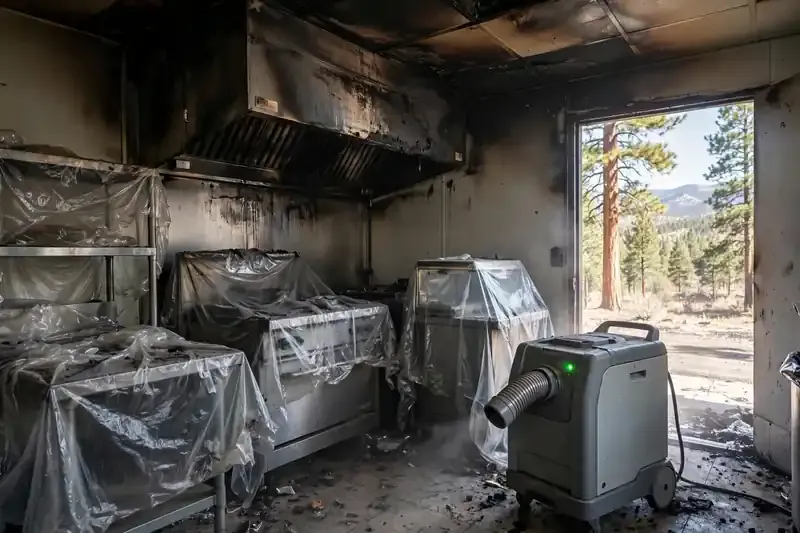
Restaurant kitchen fires leave greasy soot and protein residue on every surface, plus dry chemical powder from the hood suppression system. Cleanup means removing suppression residue, which is corrosive to cooking equipment, degreasing the line, walls and ceiling, cleaning or replacing hood filters, ducting and fans, and deep cleaning the dining room and storage areas where smoke reached. Food, packaging and anything porous near the fire is discarded. The health department typically inspects before the kitchen reopens.
The kitchen fire cleanup page explains residue and cabinet decisions in more detail for smaller kitchens.
Hotels, rentals and multi-unit buildings
In lodging, every room out of service costs money every night. A good restoration plan isolates the fire room, cleans adjoining rooms and hallways first and releases them back to the front desk as they pass odor checks. Corridors and shared HVAC are the main paths for smoke in hotels and apartment buildings, so ductwork and corridor ceilings get early attention.
For HOAs and condos, the master policy usually covers the building and common areas, while unit owners' policies cover interiors and belongings. Reports for the board, owners and each insurer keep the claim moving. Contents for guests or tenants follow the contents cleaning process.
Costs, claims and reopening
A restaurant kitchen fire commonly costs $15,000 to $60,000 to clean and repair. A single hotel room or rental unit fire often runs $10,000 to $40,000 including adjoining rooms. Smoke through an office or retail space typically costs $8,000 to $30,000. Multi-unit or structural commercial fires can exceed $150,000.
Many commercial policies include business interruption coverage, which pays lost income during restoration. That coverage depends on documenting the damage and the timeline, so ask for daily reports, photos and a written schedule. Check every contractor's Arizona ROC license, and see the fire damage repair page for the rebuild stage.
Commercial kitchens, sprinklers and suppression systems
Most commercial buildings in Flagstaff built or remodeled in recent decades have fire sprinklers, and every commercial cooking line should have a hood suppression system. Both change the cleanup. A sprinkler that activated puts clean water into the room until someone closes the valve, which adds drying to the job but often keeps the fire small. A hood system discharges a wet or dry chemical agent over the cooking line that is corrosive to stainless steel and electrical components and has to be removed promptly.
- Close the sprinkler valve only if you are trained to, then call the fire protection contractor to restore the system.
- Do not restart cooking equipment until the suppression agent is cleaned off and the system is recharged and inspected.
- Keep the fire marshal's report; insurers and landlords will ask for it.
- Ask the restoration crew to photograph the suppression residue before cleaning, as part of the claim record.
For hotels and apartments, corridor smoke doors and fire-rated walls usually limit how far smoke spreads. Where they did their job, cleanup can focus on the fire unit and the units on either side, which keeps more of the building open.
A commercial fire restoration plan, step by step
Commercial owners and managers usually need a written plan they can share with staff, tenants and insurers. A typical plan covers the order of work by area, what stays open and what closes, containment and air filtration between work zones and occupied areas, after-hours schedules, inspection milestones, and a daily report with photos. Agreeing on that plan in the first two days avoids most of the friction that slows commercial jobs down.
Documenting business losses
Keep sales records, payroll and receipts during closure to support business interruption claims.