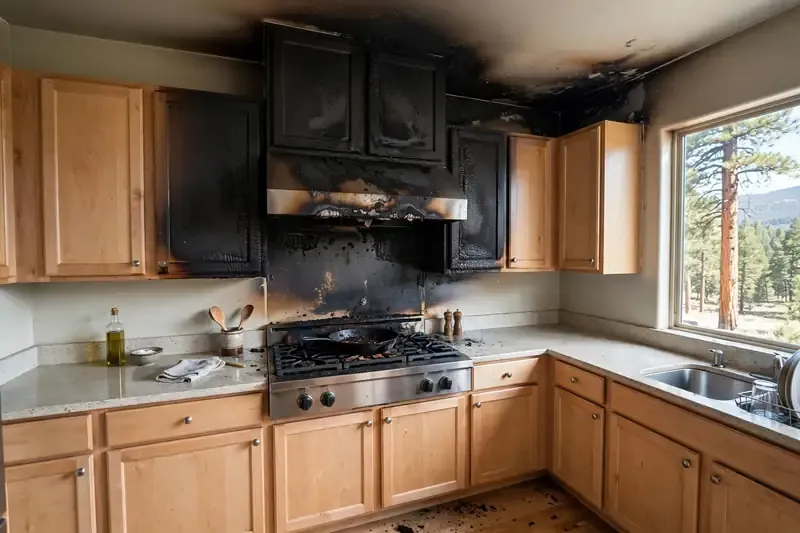
How does kitchen fire cleanup work in Flagstaff?
Kitchen fire cleanup in Flagstaff removes burned cabinets, range hoods and drywall, cleans greasy and protein smoke residue from every surface in the kitchen and nearby rooms, deodorizes and then repairs or replaces cabinets, counters and paint. Protein residue from burned food is nearly invisible but very smelly, so it needs specific cleaners. Most kitchen fires cost $3,000 to $15,000 to clean and repair.
Why kitchen fires are messy out of proportion to their size
Three things make a kitchen fire harder to clean than its size suggests. First, the residue is greasy. Burning cooking oil and fat produce smoke that clings to surfaces and smears when touched. Second, burned food leaves protein residue, a thin, almost invisible yellowish film with a powerful, lingering smell that spreads well beyond the kitchen. Third, kitchens are full of the materials that suffer most: painted cabinets, laminate counters, plastic appliance trim, textured ceilings and open shelves of dishes.
A stovetop flare that burned for thirty seconds can leave protein smell in bedrooms at the other end of the house and a sticky film on every cabinet door. The scorched area is small; the cleaning area is large.
How kitchen fire cleanup works
- Make it safe. The range is disconnected, and gas lines and electrical circuits near the fire are checked before work starts.
- Remove what burned. Charred upper cabinets, the range hood, scorched drywall and damaged countertops come out. Cabinet boxes that only took smoke may be cleaned instead.
- Empty and sort. Dishes, cookware and small appliances are packed for contents cleaning. Food that was open or near the heat is discarded.
- Degrease. Cabinets, walls, ceilings and appliances are cleaned with degreasers for oily residue and enzyme or alkaline cleaners for protein film, inside and out.
- Follow the smoke. Nearby rooms, the hallway, closets and the HVAC get the same smoke damage cleanup process.
- Deodorize. Protein odor almost always needs treatment beyond cleaning. See smoke odor removal.
- Rebuild. New drywall, sealing primer and paint, replacement cabinet doors or boxes, hood, counters and finish work. See fire damage repair.
Cabinets, counters and appliances
| Item | Clean or replace? | Notes |
|---|---|---|
| Painted or thermofoil cabinet doors | Often replace if blistered | Heat lifts thermofoil and bubbles paint even without flames. |
| Solid wood cabinets | Often clean and refinish | Smoke-only cabinets usually clean well. |
| Particleboard cabinet boxes | Replace if charred or wet | They swell from firefighting water. |
| Laminate counters | Replace if scorched or delaminated | Stone counters usually clean but should be checked for heat cracks. |
| Range and hood | Usually replace the hood; range depends on damage | Have the range and gas connection checked before use. |
| Refrigerator | Clean exterior; check seals and coils | Discard food if power was lost or smoke got inside. |
| Microwave above the range | Usually replace | Close to the flames and full of plastic. |
Kitchen fires in Flagstaff homes
Kitchens in older Flagstaff homes, especially near downtown and in Sunnyside, often have older wiring, no hood vented outside and painted wood cabinets with layers of old finish, all of which change the cleanup. Newer homes on the south and west sides tend to have open kitchens that share air with living rooms, so smoke spreads further. Vacation rentals and student rentals near NAU see more unattended cooking fires. Whatever the house, the order is the same: make safe, remove, clean, deodorize, rebuild.
At altitude, water boils at a lower temperature and cooking times run longer, which is one more reason pots get left on burners. A kitchen fire extinguisher rated for grease, mounted near the exit rather than over the stove, and a lid within reach are the cheapest fire prevention there is.
Kitchen fire cleanup costs
Smoke-only cleanup after a small pan fire typically costs $800 to $2,500. Scorched upper cabinets and a range hood, with smoke cleanup in nearby rooms, more often run $3,000 to $8,000. A kitchen gutted by fire, needing a full rebuild, commonly costs $15,000 to $45,000. Whole-house protein odor treatment adds about $700 to $2,000.
Accidental kitchen fires are generally covered by homeowners insurance. Photograph everything before cleaning, keep the burned pan or appliance if an appliance failure may have caused it, and see the fire damage restoration cost guide for how the bill is built.
Preventing the next kitchen fire
- Stay in the kitchen while frying, broiling or cooking on high heat.
- Keep a lid and a grease-rated extinguisher within reach; never use water on a grease fire.
- Clean range hood filters regularly; grease buildup in the hood feeds fires.
- Keep towels, oven mitts and paper away from burners.
- In rentals, post simple instructions for the stove and the extinguisher where guests can see them.
If a pan catches fire, turn off the burner and slide a lid over it if you can do so safely. If the fire spreads beyond the pan, get out, close the door behind you and call 911.
Kitchen fires in rentals and student housing
Kitchen fires are especially common in rentals near NAU and in short-term rentals, where people cook in unfamiliar kitchens. Landlords can reduce the risk with a working hood, an extinguisher by the exit, clear stove instructions and smoke alarms that tenants cannot easily disable. After a fire, coordinate access and contents with tenants promptly. Tenants will need their own belongings cleaned or replaced through renters insurance, so share the contents inventory with them.