Updated · Fire Damage Flagstaff
Quick answer
A fire emergency checklist for a Flagstaff home covers four things: an escape plan with two ways out of every room and a meeting spot, working smoke and carbon monoxide alarms, wood stove and ash safety, and a wildfire go-bag. After a fire, stay out until released, call your insurer, board up the house, protect plumbing from freezing in winter and photograph everything before cleanup.
Fill this in for your household
| Item | My household |
|---|---|
| Outside meeting spot | ______________________________ |
| Second way out of each bedroom | ______________________________ |
| Electric panel and main breaker | ______________________________ |
| Gas meter and shutoff wrench | ______________________________ |
| Main water shutoff (or well pump breaker) | ______________________________ |
| Fire extinguisher locations | ______________________________ |
| Insurance company, policy number and claim phone | ______________________________ |
| Out-of-area contact | ______________________________ |
| Fire restoration line | Answered 24/7 (number at the top of this page) |
Before a fire: prevention and alarms
- Smoke alarms inside every bedroom, outside each sleeping area and on every level; test them monthly.
- Carbon monoxide alarms on every level, especially with wood, pellet or gas heat.
- A fire extinguisher in the kitchen near the exit, not over the stove, and one in the garage.
- Space heaters three feet from anything that burns, plugged directly into the wall.
- Dryer lint cleaned every load and the vent duct cleaned yearly.
- Practice the escape plan twice a year, including at night.
Wood stove, fireplace and ash safety
Long Flagstaff winters make wood heat one of the biggest fire risks in town.
- Have the chimney inspected and swept every year before heating season.
- Burn only dry, seasoned wood; green ponderosa builds creosote fast.
- Keep the stove's required clearances and a non-combustible hearth pad.
- Store ashes in a metal can with a tight lid, on dirt or concrete, away from the house, for several days.
- Never dump ashes in cardboard, plastic or onto a wood deck.
- Install a chimney cap with a spark arrestor.
If a chimney fire happens, get out and call 911, and do not use the stove again until a sweep inspects it. See chimney and wood stove fire damage.
Wildfire go-bag
- Medications, glasses and medical supplies for a week.
- IDs, insurance cards, policy numbers and copies of key documents.
- Phone chargers, a battery pack and a flashlight.
- N95 masks, water and snacks.
- Pet food, leashes and carriers.
- A change of clothes and sturdy shoes.
- A photo or video inventory of your home, saved to the cloud.
Sign up for Coconino County emergency alerts and know two routes out of your neighborhood. The evacuation return guide covers coming home.
During a fire
- Get out. Do not stop to grab belongings.
- Feel doors before opening; use your second way out if a door is hot.
- Stay low under smoke.
- Close doors behind you to slow the fire.
- Call 911 from outside and go to your meeting spot.
- Never go back inside.
After a fire: the first 24 hours
- Stay out until the fire department releases the house. Get the incident number.
- Call your insurer, get a claim number and ask about a place to stay.
- Board up windows, doors and roof openings the same day. See emergency board-up.
- Protect the plumbing in winter: drain the lines or set up safe temporary heat. Homes on a well should also have the pump breaker turned off.
- Leave utilities off until an electrician and the gas company check them.
- Photograph everything before anything is moved.
- Recover essentials: IDs, medications, documents, phones.
- Don't wipe soot, run the HVAC or power on electronics.
The full sequence is in what to do after a house fire.
Keep a small fire kit
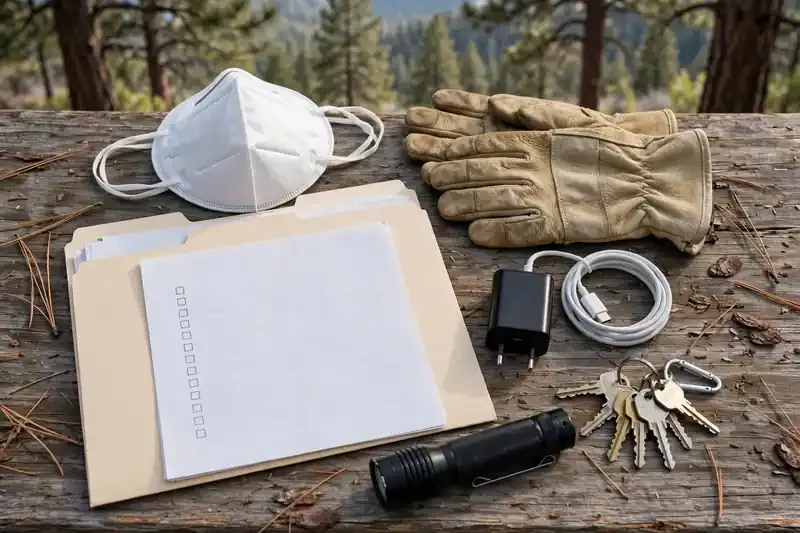
Store these together where you can grab them: a flashlight, N95 masks, work gloves, a roll of contractor bags, a tarp, a printed copy of this checklist with the blanks filled in, and a list of insurance and emergency numbers. Cabins and rentals in Munds Park, Parks and Kachina Village should have their own kit and a simple wood stove instruction sheet for guests.
Carbon monoxide and heating safety
Flagstaff winters bring a second hazard alongside fire: carbon monoxide from wood stoves, gas furnaces, water heaters and generators. CO is colorless and odorless. Headaches, dizziness and nausea that improve when you leave the house are warning signs.
- Install CO alarms on every level and near sleeping areas.
- Never run a generator, grill or camp stove indoors or in an attached garage, even with the door open.
- Have furnaces, water heaters and gas fireplaces serviced every year.
- After heavy snow, clear snow away from furnace and water heater vents on the outside wall.
Electrical and appliance fire prevention
- Plug space heaters and high-draw appliances straight into the wall, never into power strips.
- Replace frayed cords and do not run cords under rugs.
- Call an electrician if breakers trip often, outlets feel warm or lights flicker.
- Unplug chargers and small appliances that are not in use.
- Keep the area around the furnace, water heater and electrical panel clear of stored items.
Teach it to everyone in the house
A plan works only if everyone knows it. Walk children through both ways out of their rooms, show them the outside meeting spot and practice at night with the lights off. Make sure older family members and guests know how to open windows and security bars. For cabins and rentals, put a short version of this checklist inside the front door.
Smoke alarm maintenance
Smoke alarms lose sensitivity with age and dust. Vacuum them gently twice a year, replace any alarm that is ten years old, and consider interconnected alarms so one sounding sets off all of them. In cabins that sit empty, test every alarm on arrival and replace batteries each fall. Write the install date on each alarm with a marker so you know when it reaches ten years.
Related questions
What kind of fire extinguisher should a kitchen have?+
A multipurpose ABC extinguisher or one rated for grease (Class K in commercial kitchens). Mount it near the exit, not over the stove, and learn the PASS method: pull, aim, squeeze, sweep.
How do I plan an escape route from a second floor?+
Make sure bedroom windows open easily, consider a rated escape ladder for upper floors, and practice using it so children are not seeing it for the first time in an emergency.
How often should smoke alarms be tested?+
Monthly. Replace batteries yearly unless they are sealed 10-year units, and replace alarms that are 10 years old.
Where should I store wood stove ashes?+
In a metal can with a tight lid, on dirt or concrete, away from the house and decks, for several days before disposal.