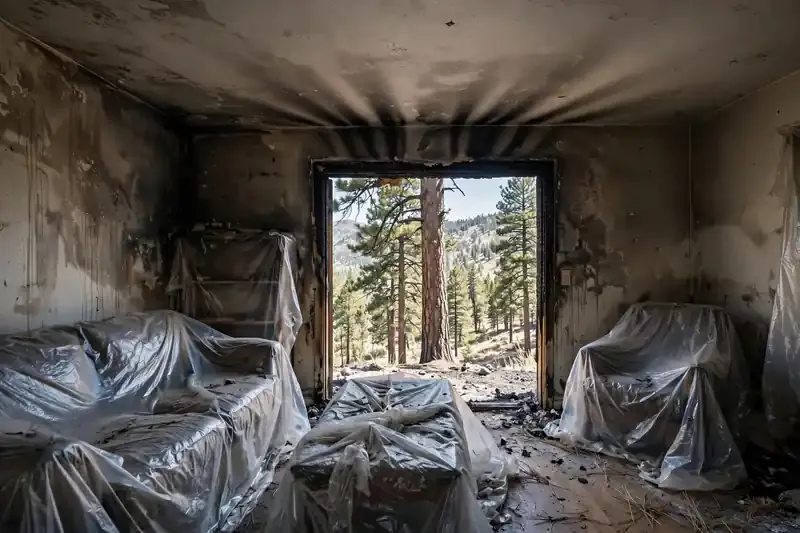
How does smoke damage cleanup work in Flagstaff?
Smoke damage cleanup in Flagstaff removes the residue a fire leaves throughout a house: on walls, ceilings, cabinets, inside closets and in the ductwork. Crews test how far smoke traveled, dry-clean loose residue first, wash surfaces with products matched to the residue type, clean the HVAC and then treat odor. Most homes cost $1,000 to $10,000 depending on how many rooms were affected.
Why smoke damage spreads farther than the fire
Heat rises and pushes smoke ahead of it. In a typical Flagstaff house fire that starts in a kitchen or at a wood stove, the burned area might be a few square feet, but the smoke plume reaches the ceiling within seconds, rolls along it and pours into every room with an open door. It is pulled into the return air vents if the furnace is running, and from there the blower sends it into every duct. It also finds the small gaps around light fixtures, outlets and attic hatches.
That is why so many homeowners are surprised by the scope. A grease fire on the stove that was out in a minute can leave a gray film on bedroom closet shelves at the far end of the house. The burned cabinet is the obvious damage. The smoke is the expensive part.
Smoke residue is not just dirt. It is acidic, and over days it starts to etch glass, pit chrome and brass fixtures, yellow white plastics and stain grout and porous stone. Left for weeks, it settles into paint and drywall paper deeply enough that cleaning alone will not remove it. Starting smoke damage cleanup within a few days is the difference between washing a wall and repainting it.
How smoke damage cleanup works
- Map the smoke. Technicians walk every room with white cloths and soot sponges, checking ceilings, the tops of door frames, closets, light fixtures and supply vents. The pattern shows where smoke went and how heavy it was.
- Identify the residue. Dry powdery residue from wood and paper, oily residue from plastics and furniture, and nearly invisible protein film from burned food each need a different cleaning approach. The soot removal page goes deeper on residue types.
- Dry clean first. Loose residue comes off with HEPA vacuums and dry chemical sponges before any water touches the surface. Wiping with a wet rag first is the most common homeowner mistake; it drives residue into the paint.
- Wet clean. Walls, ceilings, cabinets, trim and hard floors are washed with degreasers or alkaline cleaners chosen for the residue type, working top to bottom.
- Clean the HVAC. Filters are replaced, and if soot reached the ductwork, the ducts, registers and air handler are cleaned. Skipping this step re-coats the house every time the furnace runs.
- Treat the odor. After residue is gone, remaining smell is handled with thermal fogging, hydroxyl generators or ozone. See smoke odor removal.
- Seal what will not come clean. Surfaces that still hold stain or odor get a shellac-based or specialty sealing primer before repainting.
Smoke damage in Flagstaff homes
A few things about high-country houses change how smoke behaves and how it gets cleaned.
- Wood stoves and fireplaces. Many Flagstaff homes heat with wood or pellets for at least part of the winter. Back-puffing stoves, cracked flue pipe and chimney fires all put smoke into living spaces without a structure fire. The chimney and wood stove fire damage page covers those losses.
- Vaulted ceilings and open plans. Mountain-style homes with tall, open great rooms and exposed beams let smoke spread quickly and collect high, where it is hardest to reach. Cleaning rough-sawn beams and tongue-and-groove ceilings takes more time than flat drywall.
- Log and wood-paneled interiors. Unfinished or oiled wood paneling absorbs smoke. Some can be cleaned and refinished; heavily affected boards may need sanding or sealing.
- Swamp coolers. Evaporative coolers pull outside air into the house. During wildfire season they can fill a home with smoke and ash even when the nearest fire is miles away. Wildfire smoke cleanup is its own job.
What smoke damage cleanup costs
Light smoke in one or two rooms, the kind left by a contained stovetop fire or a furnace puff-back, usually runs $1,000 to $2,500 to clean. Smoke that reached most of the house, with closets, ceilings and ductwork involved, more often lands between $3,500 and $10,000. Duct and air handler cleaning adds about $500 to $1,500. Larger fires combine this work with fire damage repair and contents cleaning, which are priced separately.
| What raises the price | Why |
|---|---|
| Oily or protein residue | Needs degreasers and more passes than dry residue. |
| Textured and rough surfaces | Popcorn ceilings, rough-sawn beams and log walls trap residue. |
| Time before cleaning | Residue sets into paint and finishes after a few days. |
| HVAC involvement | Running the system after the fire spreads residue everywhere. |
| Amount of contents | Every book, dish and piece of clothing needs handling. |
Smoke damage from an accidental fire is generally covered by homeowners insurance, including smoke from a fire next door. The guide to smoke damage insurance in Arizona explains what adjusters look for.
Can you clean smoke damage yourself?
Some of it. A small puff of smoke from a burned pot, caught right away, can be handled by airing the house, washing hard surfaces with a mild degreaser and laundering fabrics. Anything more than that tends to go badly with household methods: wet rags smear residue, regular vacuums blow fine soot back into the air, and air fresheners hide the odor for a day. The soot itself is also a health concern; fine particles irritate lungs, especially for children, older adults and anyone with asthma.
If you do clean, wear gloves and an N95 mask, vacuum with a HEPA vacuum before wiping, and test cleaners on a hidden area first. If the film keeps coming back, or the smell returns on warm days, the residue is deeper than surface cleaning can reach.