How does soot removal work in Flagstaff?
Soot removal in Flagstaff starts by identifying the soot type: dry soot from wood and paper, oily soot from plastics and synthetics, or protein residue from burned food. Loose soot is lifted with HEPA vacuums and dry chemical sponges, then surfaces are washed with cleaners matched to the residue and sealed if staining remains. Most jobs cost $800 to $6,000.
Three kinds of soot, three different cleanups
Restoration technicians read soot like a fingerprint. What burned, how hot the fire was and how much oxygen it had decide what the residue looks like and how it behaves when you touch it.
| Soot type | Where it comes from | What it looks like | How it is removed |
|---|---|---|---|
| Dry soot | Wood, paper, fast hot fires, wood stoves | Powdery, gray to black, smears little | HEPA vacuum and dry chemical sponge, then light washing |
| Oily soot | Plastics, foam, synthetic fabrics, slow smoldering fires | Black, sticky, smears badly | Solvent or degreasing cleaners, several passes, often sealing |
| Protein residue | Burned meat, beans and other food left on the stove | Thin yellow-brown film, very strong odor | Enzyme or degreasing cleaners plus odor treatment |
| Fuel oil soot | Oil furnace puff-backs | Black, greasy, everywhere at once | Degreasers, duct cleaning, contents cleaning |
Most real fires leave more than one type. A sofa fire, for example, leaves oily soot near the source and dry soot farther away, so the cleaning plan changes from room to room.
How professional soot removal is done
- Test small areas. A dry sponge wipe on a wall shows whether soot lifts cleanly. If it smears, the residue is oily and needs a different approach.
- Protect what is clean. Floors and unaffected furniture are covered so falling soot does not spread.
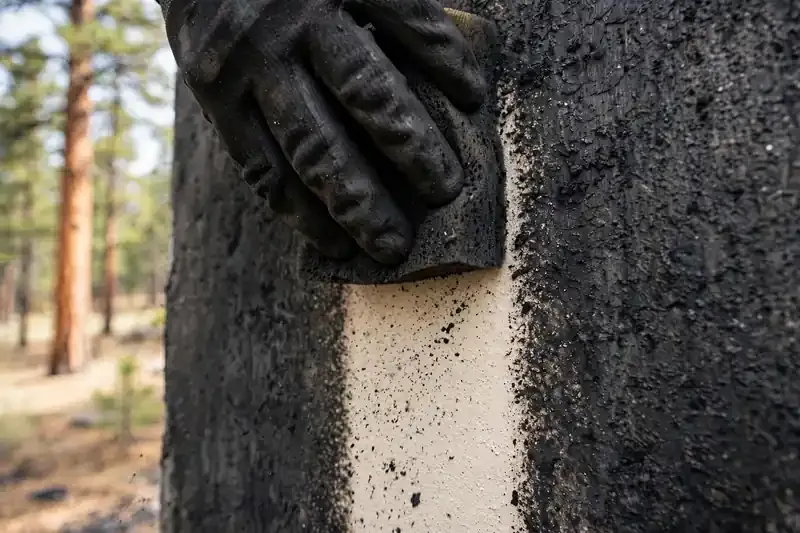
- Vacuum and dry sponge. HEPA vacuums pull loose soot off ceilings, walls, lampshades and upholstery. Dry chemical sponges, a dense vulcanized rubber, lift the next layer off flat paint without water.
- Wash. Cleaners matched to the residue are applied and rinsed, working from the ceiling down so drips land on surfaces not yet cleaned.
- Detail. Light fixtures, switch plates, blinds, cabinet interiors, window tracks and door hardware are cleaned one by one. This is where most of the hours go.
- Seal and repaint. Where shadows remain, a sealing primer locks in stain and odor before the final coat.
Soot removal usually happens alongside smoke damage cleanup and smoke odor removal. Soot is the visible residue; smoke damage is the broader job of restoring every affected room.
Soot from wood stoves, chimneys and puff-backs in Flagstaff
Not all soot calls in Flagstaff involve a house fire. Long heating seasons at 7,000 feet mean wood stoves, pellet stoves and furnaces run for months. Three non-fire soot problems come up again and again:
- Back-puffing wood stoves. A cold flue, a blocked cap, a downdraft on a windy night or opening the stove door too fast sends smoke into the room. Repeated over a winter, it leaves a gray film on ceilings and walls, often heaviest above the stove.
- Leaking stovepipe joints. Single-wall stovepipe that has separated at a joint can leak smoke into the room for weeks before anyone notices the ceiling darkening.
- Furnace puff-backs. A misfiring oil or poorly maintained gas furnace can push a cloud of soot through every duct at once, coating every room in minutes.
In all three cases, fix the source first. A certified chimney sweep should inspect the stove, pipe and chimney, and an HVAC technician should service the furnace, before cleaning starts. The chimney and wood stove fire damage page covers the cases where a chimney fire actually happened.
Surfaces that need special care
- Flat and matte paint marks easily and often needs dry sponging only, then sealing and repainting.
- Popcorn and textured ceilings trap soot in every bump. In homes built before the mid-1980s, test popcorn texture for asbestos before scraping.
- Natural stone and grout absorb soot and can etch from its acidity. They need pH-appropriate cleaners and sometimes poultices.
- Unfinished wood, beams and log walls, common in mountain homes, absorb residue and may need soda or dry ice blasting or light sanding.
- Brick fireplaces and hearths are porous and usually need dedicated masonry cleaners.
- Electronics should not be powered on until cleaned; soot is conductive and corrosive. See contents cleaning.
Soot removal costs in Flagstaff
Soot from a puff-back or a back-drafting stove in a few rooms usually costs $800 to $2,000 to remove. Kitchen fire soot in the kitchen and nearby rooms commonly runs $1,500 to $4,000. Heavy soot through the whole house lands around $3,000 to $6,000 before repainting and contents cleaning. Sealing and repainting add roughly $400 to $1,200 per room.
Soot from an accidental fire or a sudden puff-back is generally covered by homeowners insurance. Soot that built up slowly from a stove that leaked all winter may be treated as maintenance and excluded. Photograph the soot before cleaning and keep the sweep's or HVAC technician's report on the cause.
How long soot removal takes
Soot from a puff-back or back-drafting stove in a few rooms is usually removed in one to two days. A kitchen fire with soot in nearby rooms often takes two to four days. Whole-house soot removal with closets, cabinet interiors and fixtures can take a week or more, plus time for sealing and repainting.
Soot on exterior surfaces
Soot also coats siding, windows and decks near a fire. Exterior soot is cleaned with low-pressure washing and appropriate detergents; high pressure can drive it into wood and stucco.