How does smoke odor removal work in Flagstaff?
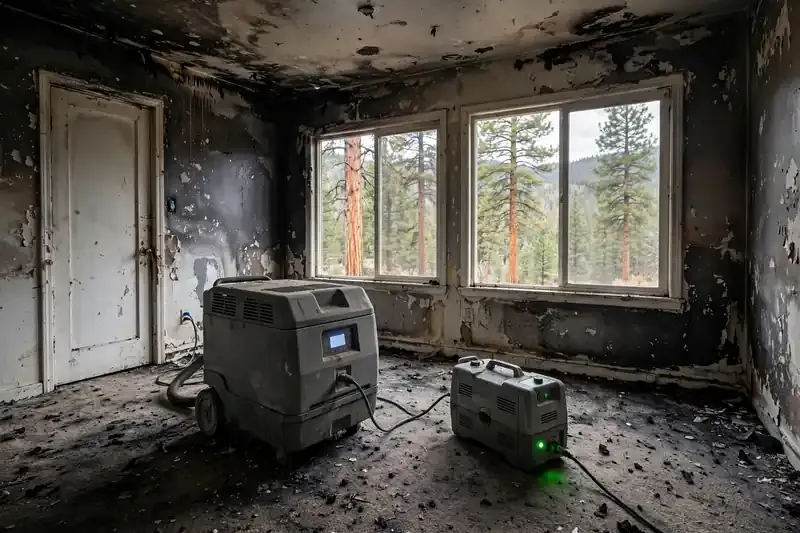
Smoke odor removal works in a fixed order: remove the residue that holds the smell, clean the HVAC, then neutralize what is left with thermal fogging, hydroxyl generators or ozone, and seal surfaces that still hold odor. Candles, sprays and airing the house out cover it for a day at most. In Flagstaff, smoke odor removal typically costs $500 to $4,000, more when soft contents and ductwork are involved.
Why smoke smell keeps coming back
Smoke odor comes from microscopic particles and gases that soaked into porous materials: drywall paper, insulation, wood, carpet pad, upholstery, clothing and the dust inside ductwork. On cool days they stay put. When the sun warms the house or humidity rises, they release again. That is why so many Flagstaff homeowners report the smell getting worse during the summer monsoon, weeks after a winter fire seemed handled.
Masking products cover the smell with another one. Ozone generators from the internet, run without cleaning first, can make things worse by reacting with residue and creating new odors. Lasting smoke odor removal follows one rule: remove the source first, neutralize the rest second.
How smoke odor removal is done
- Find where the smell lives. Technicians check closets, attics, wall cavities near the fire, carpet pad, soft furniture and the HVAC. Odor often concentrates in places with little airflow.
- Remove what holds it. Burned and heavily smoked materials, such as charred insulation, saturated carpet pad and fire-damaged drywall, come out. Cleaning residue from everything else is covered under smoke damage cleanup and soot removal.
- Clean the air handling. Ducts, registers, the blower and coils are cleaned and filters replaced. A house will never smell clean if the ducts still hold smoke.
- Neutralize. One or more of the methods below is used to break down odor molecules in the air and on surfaces.
- Seal. Framing near the fire and any surface that still holds odor is sealed with a shellac-based or specialty odor-blocking primer before rebuild and paint.
- Verify. The house is closed up and checked after treatment, ideally on a warm day, before equipment leaves.
Thermal fogging, hydroxyl and ozone compared
| Method | How it works | People and pets inside? | Best for |
|---|---|---|---|
| Thermal fogging | Heated deodorizer forms a fine fog that penetrates the same gaps smoke reached | No, during treatment | Wall cavities, attics, hard-to-reach areas |
| Hydroxyl generators | UV light creates hydroxyl radicals that break down odor molecules | Yes, generally | Occupied homes, sensitive materials, longer treatment |
| Ozone | Ozone gas oxidizes odor molecules aggressively | No, house must be empty, including plants | Heavy odor after cleaning, empty homes |
| Sealing primers | Shellac or specialty primers lock odor into surfaces | Yes, with ventilation | Framing, subfloor and surfaces that can't be cleaned further |
Ozone is effective but harmful to breathe and can degrade rubber, some fabrics and artwork with long exposure. Hydroxyl is slower but safe to run with people at home. Most real jobs use a combination.
Smoke smell in Flagstaff homes
Some odor problems here are specific to mountain living.
- Wildfire smoke. The Tunnel and Pipeline Fires in 2022 and the Museum Fire in 2019 filled Flagstaff homes with smoke for days. Homes with swamp coolers running or windows open picked up odor in curtains, carpet and cooler pads. See wildfire smoke cleanup.
- Wood stove odor. A stove or fireplace that back-drafts all winter leaves a stale smoke smell in upholstery and paneling even with no fire event.
- Log and wood interiors. Unfinished wood soaks up odor deeply and may need sealing or refinishing to release it.
- Cold climate, closed houses. Homes stay shut for months in winter, which concentrates any lingering odor.
Smoke odor removal costs
Treating a single room after cleaning usually costs $500 to $1,200. Whole-house thermal fogging or hydroxyl treatment commonly runs $1,500 to $4,000 depending on size and how many treatments it takes. Odor-sealing primer adds around $300 to $900 per room, and duct cleaning with deodorizing $500 to $1,500. Clothing, bedding and furniture are often handled separately through contents cleaning.
Odor removal after a covered fire, including smoke from a neighbor's fire or a wildfire, is normally part of the insurance claim. Write down when and where the smell is strongest; adjusters respond to specifics.
Odor after a chimney or wood stove fire
Wood smoke smells different from a kitchen or furniture fire, and many Flagstaff residents are used to a hint of it in winter. After a chimney fire, though, the smell is heavier and sour, and it settles into attic insulation, the framing around the flue and soft furnishings in the room with the stove. Replacing smoke-soaked attic insulation around the chimney and sealing nearby framing usually does more than any amount of fogging in the living space.
Pellet stove malfunctions leave a sharper, more chemical smell from overheated pellets and plastic components, and the residue tends to be oilier. Expect more cleaning passes and a longer odor treatment.
Odor in cars, RVs and trailers
Vehicles, RVs and travel trailers parked near a fire or inside a burned garage absorb smoke in seats, carpet, headliners and ventilation systems. They usually respond well to interior cleaning, cabin filter replacement and an ozone treatment with nobody inside. RVs and trailers stored in Flagstaff yards through fire season are common candidates. Fabric awnings and mattresses in campers hold odor longest and may need separate cleaning or replacement.